China’s solar story has moved beyond panel production and rapid capacity growth. The harder question is what is the future of solar power infrastructure when sunlight changes hourly, demand shifts geographically, and grids face increasing pressure? This introduction examines China’s next phase through technology, policy, finance, and practical deployment.
Fatih Birol, Executive Director of the International Energy Agency, described solar power clearly: “Solar PV is the new king of electricity markets.” His statement reflects solar’s falling costs and expanding role in global electricity systems. In China, that role includes desert-scale projects, rooftop arrays, battery storage, flexible transmission, and smarter distribution networks. A solar farm now connects to more than panels. It connects to forecasting software, inverters, substations, and local consumption.
The future will not be perfectly smooth. Renewable projects can face land constraints, transmission bottlenecks, price competition, and uneven regional demand. Grid flexibility may become as important as panel efficiency. Recycling will also matter when early modules reach retirement. These issues deserve more attention than optimistic capacity headlines usually receive.
This article will assess how China can balance expansion with reliability. It will consider whether storage can reduce curtailment, whether distributed solar can strengthen rural energy systems, and how manufacturing leadership can remain financially sustainable. Some predictions may prove wrong. That uncertainty is useful. It encourages closer attention to evidence, operating experience, and the difference between installed capacity and electricity actually delivered.
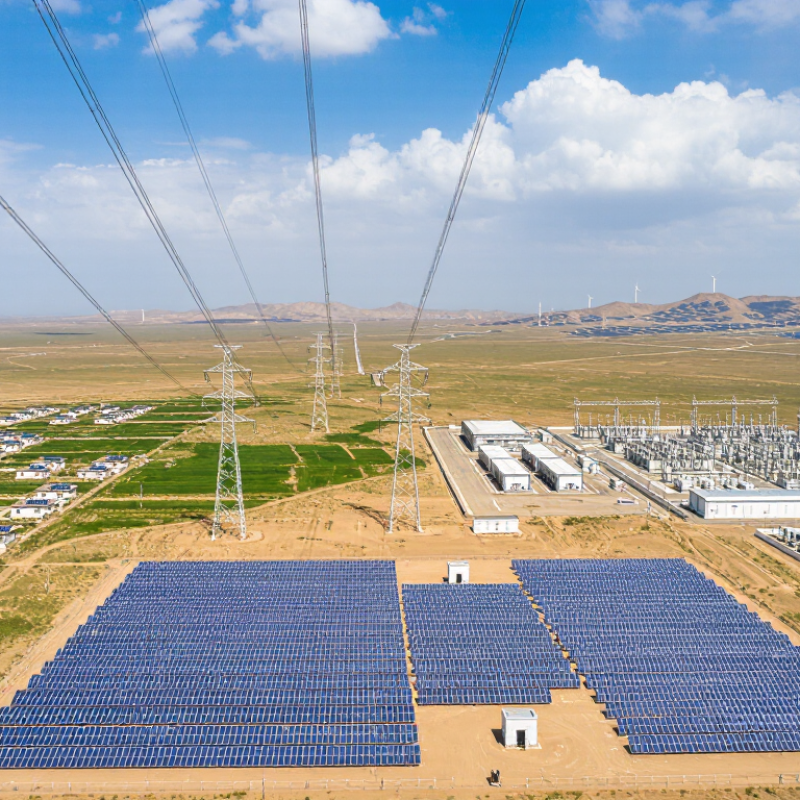
China’s solar power infrastructure has expanded from isolated projects into a nationwide energy system. Large solar bases are developing in northern and western regions, where open land and strong sunlight support utility-scale generation. In eastern provinces, rooftop systems are spreading across factories, warehouses, farms, and public buildings. This mixed structure gives solar power wider access to electricity users.
Grid connection remains a central challenge. Solar output changes with clouds, seasons, and daily demand. New transmission lines, energy storage, forecasting tools, and flexible power plants can reduce these fluctuations. China is also improving high-voltage transmission between resource-rich regions and coastal cities. However, rapid construction may create local congestion or underused capacity. That weakness deserves more attention.
Tips: Assess solar projects through land use, grid access, storage capacity, and maintenance quality. Check whether a project serves nearby demand or depends heavily on long-distance transmission. Field experience shows that dust, extreme weather, and limited technical staff can reduce real performance. Policy targets are useful, but they do not replace measured operating data. Future development may become more balanced, with solar generation linked closely to industrial parks, rural communities, and resilient local grids.
China’s cumulative solar photovoltaic capacity expanded rapidly from 2019 to 2024, reflecting continued investment in large-scale renewable power infrastructure and distributed generation.
Data: Year-end cumulative grid-connected solar PV capacity in China, measured in gigawatts (GW), based on publicly reported National Energy Administration statistics.
China's solar future will depend less on panel volume and more on system intelligence. High-efficiency cells, including tandem designs that combine silicon and perovskite layers, can produce more electricity from limited land. That matters in eastern provinces, where rooftops and industrial sites are often crowded. Yet laboratory efficiency is not field performance. Heat, dust, humidity, and long-term degradation still demand careful testing.
Grid-forming inverters will become important as solar replaces conventional generation in regional power systems. They can help stabilize voltage and frequency during sudden cloud cover or changing demand. Battery storage adds flexibility, especially when midday output exceeds local consumption. Long-duration storage may be necessary, but its cost and material requirements remain difficult questions. Transmission upgrades, including high-voltage direct-current links, can move renewable electricity from western deserts to eastern load centers.
Digital platforms will monitor faults, forecast output, and guide maintenance before small failures become expensive outages. Field experience suggests that clean data is as valuable as sophisticated software. Solar designs will also become more local. Agrivoltaic projects may share land with crops, while floating arrays can reduce pressure on scarce ground. Recycling must grow alongside deployment, because retired modules will eventually test China’s waste-management capacity. Some projects will underperform; transparent lessons will matter more than polished forecasts.
China’s solar future depends on grid flexibility, not panel capacity alone. In northern provinces, large solar farms can produce excess electricity around noon. Evening demand then rises after sunlight fades. This mismatch creates pressure on transmission lines, dispatch centers, and local balancing resources.
Storage must match each region’s daily pattern. Four to six hours of battery storage could support evening peaks near major cities. Pumped hydro may serve longer periods, although suitable sites are limited. Thermal storage and compressed-air systems could help industrial regions. They remain less mature and need careful cost evaluation. Storage projects also require accurate weather forecasts, strong safety controls, and clear rules for charging and discharging.
The grid needs more than stored energy. It needs fast frequency response, flexible power plants, and inverters that support voltage stability. Digital control systems can coordinate rooftop solar, utility-scale projects, and electric vehicles. However, communication failures and poor data quality can weaken these systems. Practical testing should include cloudy weeks, transmission outages, and sudden demand changes. A project that works during a sunny trial may struggle during winter pollution or prolonged storms. I may underestimate future storage costs, because material prices and market rules can change quickly. That uncertainty deserves more attention than optimistic capacity targets.
China’s solar future will depend on policy quality, not only installed capacity. National targets continue to encourage renewable electricity and cleaner industrial growth. Provincial rules now shape land access, grid connections, and storage requirements. These details matter greatly.
In project reviews, unclear approval timelines can delay construction for months. Policy stability also helps lenders assess repayment risks and long-term returns. Yet frequent local adjustments may create uncertainty for smaller developers.
Investment is shifting from panel construction toward complete energy systems. Utility-scale projects increasingly include batteries, flexible inverters, and upgraded transmission lines. A solar site in a western desert may need hundreds of kilometers of new grid capacity.
Coastal provinces face different priorities, including rooftop systems and industrial demand. Financing costs remain important. Projects with reliable generation data usually attract stronger institutional interest. However, aggressive capacity forecasts can overlook maintenance, land restoration, and replacement expenses.
Regional deployment will become more specialized.
Western areas offer wide open land and strong sunlight, but transmission congestion remains a practical concern. Northern regions may combine solar with heating networks and seasonal storage. Eastern cities can expand distributed systems on factories, warehouses, and public buildings.
Grid queues are real. Curtailment is real. Data quality also varies between provinces. Policymakers may need better public reporting on connection delays, storage performance, and local electricity use. Some projects will still be approved too quickly, leaving communities and investors to discover weaknesses later.
China’s solar infrastructure is entering a more difficult growth phase. The National Energy Administration reported about 887 gigawatts of solar capacity by the end of 2024. Annual additions exceeded 277 gigawatts, showing remarkable construction speed. Yet speed is not the same as system quality. Grid connection, flexible demand, and local storage now matter as much as panel production.
The International Energy Agency expects China to provide around 60% of global renewable capacity growth through 2030. This pathway requires stronger transmission networks and better regional power markets. Utility-scale projects can support industrial regions, while distributed solar can serve factories and rural buildings. However, dense development may increase land conflicts and create uneven local benefits. Curtailment has improved, but it has not disappeared.
Storage remains central. China’s policy reports increasingly support batteries, pumped hydropower, and flexible thermal generation. These assets can manage evening demand after solar output falls. Recycling also needs earlier planning, because large volumes of retired panels will eventually require safe material recovery. The International Renewable Energy Agency highlights supply-chain resilience and responsible deployment as long-term priorities. A practical weakness remains: some projects still emphasize installed capacity over reliable electricity. That approach looks impressive on paper, but it may not survive severe weather, weak demand, or delayed grid upgrades. Growth must become slower in places, smarter everywhere, and more accountable to actual power needs.
| Infrastructure Dimension | Latest Reference Data | Current Significance | Future Challenge | Growth Pathway |
|---|---|---|---|---|
| Cumulative solar photovoltaic capacity | 609.49 GW at the end of 2023 | Solar power has become one of the largest sources of new electricity capacity in China. | Rapid capacity growth can increase local congestion, balancing requirements, and land-use pressure. | Prioritize coordinated planning for generation, transmission, storage, and flexible demand. |
| Annual solar capacity additions | Approximately 216.9 GW added in 2023 | The installation pace demonstrates strong policy support, falling equipment costs, and large domestic demand. | Construction speed may outpace the expansion of grid connection and system flexibility. | Shift from capacity-led expansion toward higher-quality, grid-compatible projects. |
| Distributed solar installations | About 96.3 GW of distributed capacity added in 2023 | Rooftop and local projects reduce transmission distances and support on-site electricity consumption. | Roof ownership, structural safety, fire protection, financing, and local distribution limits can slow deployment. | Develop standardized roof assessments, digital monitoring, aggregation, and local energy-storage systems. |
| Utility-scale solar additions | About 120.6 GW added in 2023 | Large projects enable economies of scale and support renewable-energy development in resource-rich regions. | Many resource-rich areas are far from major demand centers and may have limited local flexibility. | Combine large solar bases with transmission upgrades, storage, flexible generation, and industrial demand. |
| Solar power generation | Approximately 584 TWh generated in 2023 | Solar electricity is becoming a significant contributor to China’s power supply and emissions reduction efforts. | Output varies by weather, season, and time of day, creating a need for better forecasting and balancing. | Improve forecasting, market-based dispatch, demand response, and coordination with hydropower and storage. |
| Solar utilization and curtailment | National photovoltaic utilization remained about 98% in 2023 | High utilization indicates that most solar output could be absorbed by the power system. | Curtailment risks may rise as renewable penetration increases in areas with weak grids or concentrated construction. | Use transparent curtailment reporting, stronger regional interconnection, and flexible electricity markets. |
| New-type energy storage | 31.39 GW / 66.87 GWh in operation at the end of 2023 | Storage helps shift solar output, manage short-term variability, and reduce stress on transmission networks. | Project economics, safety standards, revenue mechanisms, and battery-life management remain important constraints. | Establish capacity, ancillary-service, and energy-arbitrage markets while strengthening safety and recycling rules. |
| Renewable-energy transmission | Long-distance transmission is central to connecting western and northern renewable resources with eastern and southern demand centers. | Transmission corridors allow solar generation to serve regions with higher electricity demand. | Permitting, construction time, system stability, and coordination between provinces can delay delivery. | Plan transmission together with renewable bases and improve interprovincial electricity trading. |
| Grid modernization | Increasing solar penetration requires stronger distribution networks, advanced controls, and improved dispatch systems. | Digital grid infrastructure can improve visibility, reliability, and the integration of distributed generation. | Distribution networks may face reverse power flows, voltage fluctuations, and limited hosting capacity. | Expand smart-grid controls, advanced metering, flexible interconnection, and automated demand response. |
| National climate-policy alignment | China targets a carbon-emissions peak before 2030 and carbon neutrality before 2060. | Long-term climate objectives provide a structural basis for continued solar and grid investment. | Power-system reliability and economic development must be maintained while coal use is gradually reduced. | Coordinate solar growth with energy efficiency, electrification, storage, flexible generation, and carbon-market reforms. |
| 2030 renewable-capacity milestone | The national target calls for wind and solar power capacity to exceed 1,200 GW by 2030; China had already surpassed this combined level by the end of 2023. | The milestone has shifted the policy focus from simply adding capacity toward improving system integration and utilization. | Future growth will require sufficient flexibility, transmission, storage, market reform, and consumer-side participation. | Build a more integrated electricity system in which solar power is supported by storage, flexible loads, regional markets, and digital infrastructure. |
Development combines large solar bases in northern and western regions with rooftop systems in eastern areas. Panels cover factories, warehouses, farms, and public buildings. This mixed structure improves access, but growth is uneven.
Solar output changes with clouds, seasons, and daily demand. A western project may need hundreds of kilometers of transmission lines. Congestion can leave some capacity underused.
Four to six hours of battery storage could help meet evening peaks near major cities. Pumped hydro may support longer periods, but suitable sites are limited. Storage needs careful cost and safety checks.
Flexible power plants, fast frequency response, and supportive inverters can stabilize the grid. Digital controls can coordinate solar sites, electric vehicles, and local demand. Communication failures remain a weakness.
Western areas offer strong sunlight and open land, but transmission congestion is a serious concern. Northern regions may combine solar with heating networks and seasonal storage. Eastern cities can expand rooftop systems near factories and warehouses.
They should examine land use, grid access, storage capacity, maintenance quality, and measured generation data. Dust, storms, and limited technical staff can reduce performance. Policy targets alone are not enough.
National targets encourage renewable electricity and cleaner industrial growth. Local rules influence land access, grid connections, and storage requirements. Unclear approvals can delay construction for months.
Aggressive capacity forecasts may overlook maintenance, land restoration, and replacement costs. Curtailment, connection delays, and poor data reporting can hide project weaknesses. I may underestimate future storage costs, so optimism needs testing.
China’s solar power infrastructure is expanding from large utility-scale projects into distributed systems for industrial parks, commercial buildings, rural communities, and hybrid renewable-energy zones. Its development is supported by improvements in high-efficiency solar modules, intelligent power-management systems, flexible inverters, and digital monitoring tools. As solar generation increases, stronger transmission networks, demand-response mechanisms, and energy storage will be essential for balancing intermittent output and improving grid reliability.
The future direction will be shaped by coordinated policy, long-term investment, regional resource differences, and the modernization of electricity markets. Northern and western areas may continue to support large solar bases, while eastern and southern regions can benefit from rooftop and urban installations. Key challenges include land use, curtailment, recycling, financing, and extreme-weather resilience. Overall, what is the future of solar power infrastructure will depend on integrating technology, storage, grid flexibility, and responsible planning to achieve stable, affordable, and sustainable growth.

3UP Energy